Tap, play, pause, rewind, rewatch. This is how many consume much of the tango dancing available today. The commodification of tango and the commercialization of large social events have turned tango enthusiasts and students into spectators, and professional dancers and teachers into performers. Tango for many has become a show.

Before social media and YouTube, tango shows lived in theatre, and performances were rare opportunities, usually tied to community events and personal celebrations. Nothing was recorded, stored, or replayed, so everyone felt part of a real-time and spontaneous present experience. Today that’s reversed: most of what we see of expert dancing isn’t a rare live event but a clip we can replay on demand, and that availability has changed what “watching a maestro” even means.
Tango as a display of moves and moments for mass consumption and promotion has quickly become a prominent reference for watching a maestro or an expert dance, especially in small communities. This societal shift has distorted how social dancers perceive their own dancing, and it has changed how teachers and experts carry themselves when dancing socially, too. This new context touches everyone.
It is now common that a dancer who has spent more hours watching performance reels than dancing at a milonga starts treating the social floor the same way: throwing in a flashy move for the people watching from the sidelines, or glancing toward a phone that might be filming, rather than staying inside the embrace and the music. The same happens to teachers and experts, who can feel the pull to perform even when they’re just dancing socially among friends. Social dancing can now feel like part of a performance. This shift in context has changed every dancer’s behavior, regardless of experience.

This is the landscape we live in today, and it deserves serious consideration from ourselves as well as when we think of our community members, newcomers, and students. What kind of tango dancing are we interested in? Are other aspects of the dance part of our observational experience? Do we want to be part of the show, be a spectator, or someone else?
This matters just as much, if not more, for those of us who assist others. As facilitators, we have a specific role in the community, and that defines new boundaries and expectations. To be a well-tuned facilitator, we need to step back and make an effort to forget the performative aspect of tango, so we can take a fresh look at the dancers in our community. We are watching fellow dancers, not teachers or performers. It isn’t a spectacle, so effect, technical precision, dexterity, and allure matter less. We must create a list of our honest priorities and not shy away from our values.
When we want to assist others, we must step back, soften our gaze, and practice observing with a fresh, kind, open innocent look. The dancers we want to assist are vulnerable to our watchful eye, and we are vulnerable to our own judgment of what counts as good tango dancing.
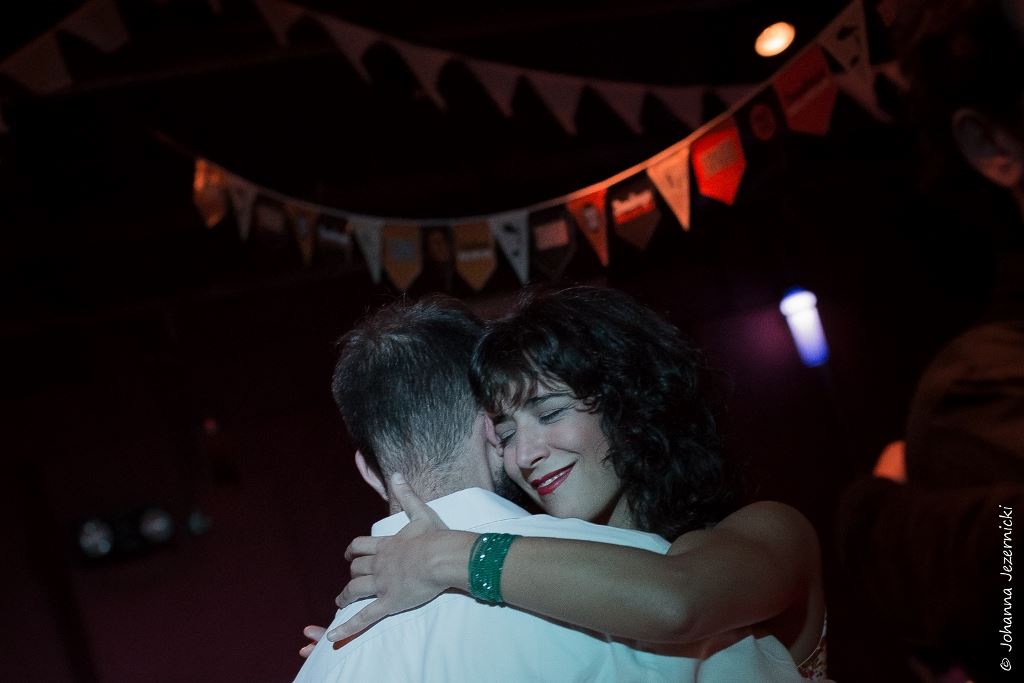
For this week’s assignment, we’re going to do an exercise on observation.
- Begin by grabbing a piece of paper and a pen.
- Sit comfortably and take a minute to set your intention for what’s coming: you are watching two social dancers improvise for you.
- Watch the clip
- Once the short forty second clip has ended, write down a description of what you saw. All impressions are valid. This exercise is meant to help you see what you gravitate toward and what you consider salient.
- Important: you can only watch this clip twice, and you cannot use slow motion or pause it.
- Post your observation on the discussion board, and title your post “Observation Assignment.”